Arena Athletic Blog 
Barefoot Running Style – A better way to run?
If you are familiar with my training regiment then you know that distance running is just not part of my routine. I am just not a fan of anything much over a 5K. Now I hope I do not offend all of you runners out there. If you like to run have at it, it is just not my thing. I find it monotonous and personally feel the health benefits of long distance running are not worth the risks. During my day at the Arena District Athletic Club, I speak with a lot of avid runners and there is one common theme that I hear – my knees hurt, I have this sharp pain in my hip, my chins are killing me, hmmm, now I am no doctor but if you are experiencing these kinds of symptoms then something wrong. The question is what? It could be several things such as overtraining, poor mechanics and or a muscle imbalance. So what is the right way to run?
Recently there has been a lot of attention given to “barefoot” running. There has been a growing body of research suggesting that the midfoot strike running style humans intuitively use when they run barefoot has an evolutionary and biomechanical advantage over the traditional style of landing on the heels. Translation: Running barefoot is more efficient. And makes you a stronger runner!
Just about every shoe manufacture has gotten on board with this trend, developing shoes that replicate the motion and feel of barefoot running. When most people wear traditional running shoes they tend to hold their body in a vertical position while focusing on generating push-off propulsion and landing on the sneakers' heavily cushioned heels. Barefoot running advocates say this heel striking is like flooring an accelerator then screeching to a halt with every stride causing the body to have to absorb a tremendous impact on the hip and knee joints. They prefer the midfoot running style, tilting their bodies forward, and landing on the fleshy part of the midfoot where the metatarsals disperse the shock of impact primarily through the muscles causing less impact on the joints.
Preliminary studies on this barefoot-style of running seem promising, suggesting that it could lower chances of ankle and lower leg injuries, and even help to conserve energy. But the research is far from conclusive. Most of the data is based on runners in developing countries and in labs, neither of which directly correlates to the running most of us are used to.
Now if you have been running using a traditional stride and you are not experiencing any problems, altering your stride could result in injury. If you plan on switching to a barefoot style of running do so gradually. Reduce your mileage until you get use to it and perfect your technique. For those of you who long to run pain free miles this just may be the answer you’ve been looking for.
Fight Gone Bad
The Arena District Athletic Club in Columbus is proud to support Fight Gone Bad!
A 17 minute grueling workout designed to test your strength and endurance.
Saturday September 25th, 9:30am
The workout will consist of a series of 5 exercises. Each individual will perform each of the 5 exercises for 1 minute each. After this 5 minute cycle, each athlete will have one minute to rest. The cycle will then begin again. Each athlete will complete the cycle 3 times for a total of 15 minutes, with one minute of rest between each cycle.
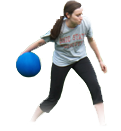
Wall-ball, 10 ft target (Reps) - Sumo dead lift high-pull (Reps) - Box jump (Reps) - Push-press (Reps) - Row (Calories)
1. Wall-ball, 10 ft target (Reps)
2. Sumo deadlift high-pull (Reps)
3. Box jump (Reps)
4. Push-press (Reps)
5. Row (Calories)
Select division (circle number)
1. Class A: Standard Men = 75lb push-press and sumo deadlift high pull, 20lb wall- ball and 18 inch box jump
2. Class B: Modified Men/Standard Women = 55lb push-press and sumo deadlift high pull, 14lb wall-ball and 18 inch box Jump
3. Class C: Intermediate = 35lb push-press and sumo deadlift high pull, 8lb wall-ball and 18 inch box Jump (step ups are okay)
Fee: Member $20 Non-Member $25
For more information or to register contact Bill at brown@arenaathletic.com
Check out the New Group Class Schedule!
Eating Right is hard to do?
Eating right is one of the most difficult things we face in pursuing our fitness goals but it is arguably the most important things we can do to help us in achieve the results we desire. Here are some misconceptions that will help you navigate through all the misinformation and marketing hype:
1) Low fat diets are good for you...
Some fats are actually good for you and your body needs them.
The body needs fat for energy, tissue repair and to transport vitamins A, D, E and K around the body.
Don't try and follow a low fat diet. Instead eat plenty of unsaturated fats (and even some saturated fats that are good for you).
2) Diet foods can help you drop pounds...
Diet foods can actually make you fatter.
You may be doing yourself more harm than good by scanning labels for the lowest calorie and fat counts. Prepackaged diet foods can have a lot of sugar and trans fat.
3) The more you cut calories, the more weight you’ll lose...
A lot of people make this mistake and they'll gain weight in the long run. Cut your calories too far—below 1,000 a day—and you’ll end up decreasing your metabolism and muscle mass. To get the most out of the calories you do eat, choose whole foods such as fruits and vegetables, lean meat and fish, raw nuts and whole grains that are as close to their natural state as possible. They have a higher “nutrient density” than refined foods, because they pack more vitamins and minerals into fewer calories.
For the healthiest diet eat as many raw foods as possible consisting of lots of fresh fruits and vegetables, some nuts and seeds, whole grains and lean proteins. The Arena District Athletic Club offers the following nutritional support:
On The Go Nutrition
Jennifer C. Shrodes, RD, LD
Healthy Advice for Busy Lives
jshrodes@gmail.com
614.582.1290
Free On-line Nutrition System. See a staff member to receive your access code. Click here for more information: http://www.arenaathletic.com/services/healthy-links
Get Your Shape on with fitCAMP
www.arenaathletic.com/the-club/whats-new#13
How to Lose Weight—and Keep It Off
by Jennie McCary, MS, RD, LD
Pump Up, Slim Down
Tired of sweating all over every piece of cardio equipment at the gym and still getting zero love from the scale? You need more iron. Not in your diet—in your hands. According to the National Center for Health Statistics, a mere 21 percent of women strength train two or more times a week. What you don't know: When you skip the weight room, you lose out on the ultimate flab melter. Those two sessions a week can reduce overall body fat by about 3 percentage points in just 10 weeks, even if you don't cut a single calorie. That translates to as much as three inches total off your waist and hips. Even better, all that new muscle pays off in a long-term boost to your metabolism, which helps keep your body lean and sculpted. Suddenly, dumbbells sound like a smart idea. Need more convincing? Read on for more solid reasons why you should build flex time into your day.
Torch Calories 24/7
Though cardio burns more calories than strength training during those 30 sweaty minutes, pumping iron slashes more overall. A study in The Journal of Strength and Conditioning Research found that women who completed an hour-long strength-training workout burned an average of 100 more calories in the 24 hours afterward than they did when they hadn't lifted weights. At three sessions a week, that's 15,600 calories a year, or about four and a half pounds of fat— without having to move a muscle.
What's more, increasing that afterburn is as easy as upping the weight on your bar. In a study in the journal Medicine & Science in Sports & Exercise, women burned nearly twice as many calories in the two hours after their workout when they lifted 85 percent of their max load for eight reps than when they did more reps (15) at a lower weight (45 percent of their max).
There's a longer-term benefit to all that lifting, too: Muscle accounts for about a third of the average woman's weight, so it has a profound effect on her metabolism, says Kenneth Walsh, director of Boston University School of Medicine's Whitaker Cardiovascular Institute. Specifically, that effect is to burn extra calories, because muscle, unlike fat, is metabolically active. In English: Muscle chews up calories even when you're not in the gym. Replace 10 pounds of fat with 10 pounds of lean muscle and you'll burn an additional 25 to 50 calories a day without even trying.
Target Your Trouble Spots
If you've ever tried to ditch the saddlebags and ended up a bra size smaller instead, you know that where you lose is as important as how much. As great as it might be to see the numbers on the scale go down, when you're on a strict cardio -only program your victory is likely to be empty. A recent study at the University of Alabama at Birmingham compared dieters who lifted three times a week with those who did aerobic exercise for the same amount of time. Both groups ate the same number of calories, and both lost the same amount—26 pounds—but the lifters lost pure chub, while about 8 percent of the aerobicizers' drop came from valuable muscle. Researchers have also found that lifting weights is better than cardio at whittling intra-abdominal fat—the Buddha-belly kind that's associated with diseases from diabetes to cancer.
Just don't rely exclusively on the scale to track your progress in the battle of the bulge. Because muscle is denser than fat, it squeezes the same amount of weight into less space. "Often, our clients' scales won't drop as fast, but they'll fit into smaller jeans," says Rachel Cosgrove, owner of Results Fitness in Santa Clarita, Calif. And it's the number on the tag inside your bootcuts you want to get lower, right?
Start Pumping
Begin with three weight-training sessions each week, recommends Joe Dowdell, founder and co-owner of the New York City gym Peak Performance. For the greatest calorie burn, aim for total-body workouts that target your arms, abs, legs, and back, and go for moves that will zap several different muscle groups at a time—for example, squats, which call on muscles in both the front and back of your legs, as opposed to leg extensions, which isolate the quads.
For each exercise you do, try to perform three sets of 10 to 12 reps with a weight heavy enough that by your last rep you can't eke out another one without compromising your form. To spark further muscle building, William Kraemer, Ph.D., a professor of kinesiology at the University of Connecticut, suggests alternating moderate-intensity workouts of eight to 10 reps with lighter-weight 12- to 15-rep sets and super-hard three- to five-rep sets. And remember to fuel your workout properly. Too many dieters make the fatal error of cutting back on crucial muscle-maintaining protein when they want to slash their overall calorie intake. The counterproductive result: They lose muscle along with any fat that might have melted away. Sports nutritionist Cassandra Forsythe, Ph.D., co-author of The New Rules of Lifting for Women, recommends that you eat one gram of protein for every pound of your body weight that does not come from fat. For instance, a 140-pound woman whose body fat is 25 percent would need 105 grams of high-quality protein. That's roughly four servings a day; the best sources are chicken or other lean meats, soy products,and eggs.
Ready to turn yourself into a lean, mean, calorie-torching machine? Then go get pumped!
By Lauren Aaronson, Women's Health